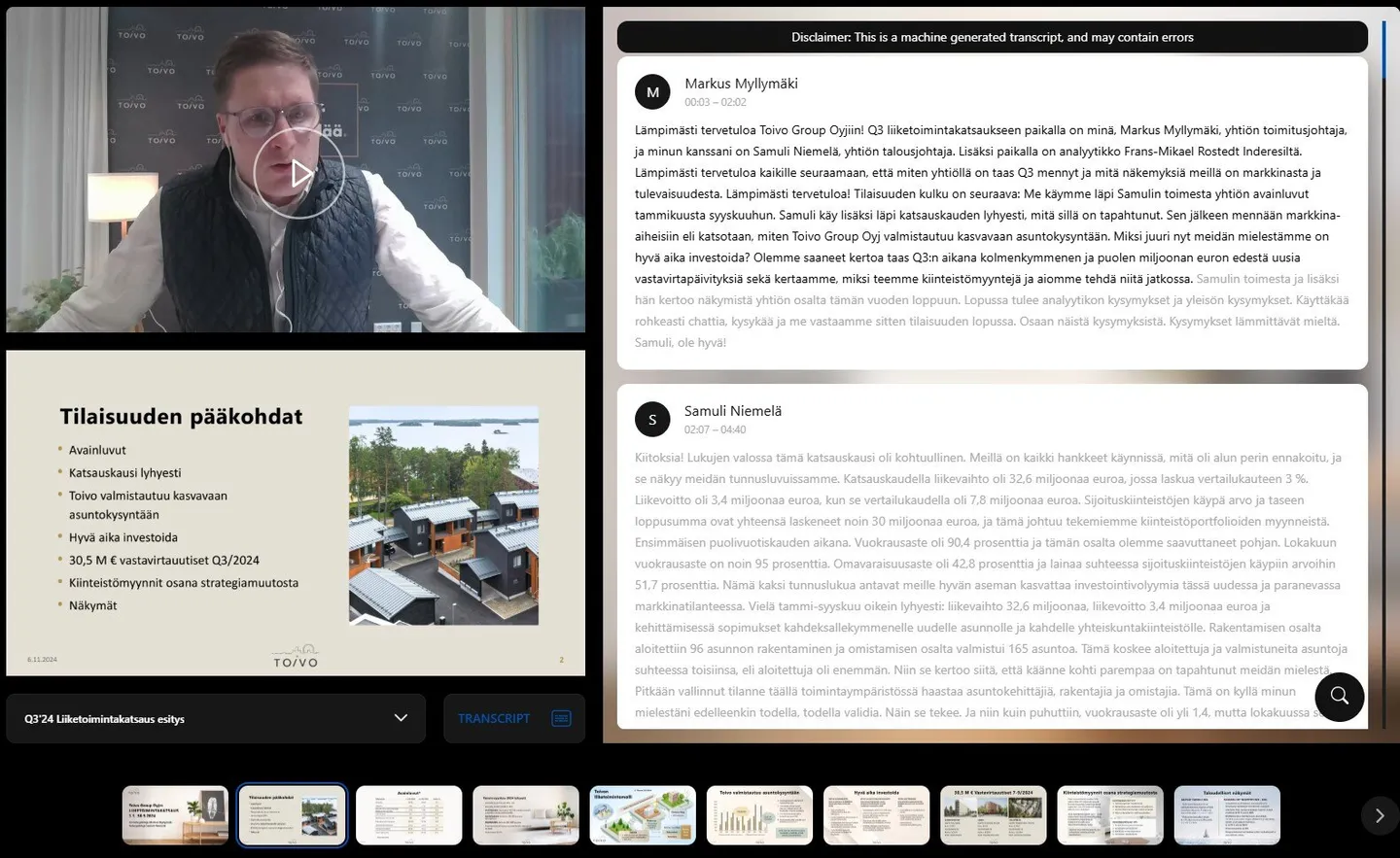
The Role of Quarterly Earnings Calls
For small cap companies, quarterly earnings calls serve as natural checkpoints to engage with stakeholders. The quarterly cycle provides structure to investor communications and ensures regular engagement, allowing companies to pause and report on performance and outlook.
While some companies publish press releases about developments between quarters, many small caps with steady business models may find creating news between quarters forced. The quarterly cadence addresses this challenge naturally.
Building and Measuring Audience Engagement
Attracting the right audience requires a strategic multi-channel approach:
- Making official stock exchange releases
- Sending personal invitations to top 100 shareholders
- Publishing announcements on LinkedIn
- Creating video teasers across social media channels
The company tracks several engagement metrics:
- Number of live viewers during the webcast
- Views of the recording afterward
- Engagement with promotional content
Companies should also adapt to changing consumption habits, creating short clips from full presentations for platforms like TikTok to reach broader audiences.
The Ingredients of a Quality Earnings Call
Several factors contribute to professional and engaging quarterly webcasts:
- Efficient production — Streamline processes since management teams have multiple responsibilities
- Professional quality — Maintain high standards despite efficiency needs
- Visual presentation — Proper camera framing, lighting, and backgrounds make significant differences
- Preparation — Well-prepared presentations with thoughtful speaker transitions create cohesive experiences
- Interactivity — Q&A sessions with analysts and participants enhance overall value
Professional-looking webcasts don’t require expensive equipment. Simple attention to details improves quality significantly:
- Proper lighting (soft background light plus front-facing light)
- Appropriate camera framing
- Organized, professional-looking background
Preparation: The Key to Success
The preparation process includes:
- Create compelling slides — Develop content that excites the organization and is worth discussing
- Print physical copies — Review past presentations to maintain consistency and highlight key points
- Prepare opening statements — Write opening lines for each slide to launch discussions naturally
- Coordinate with team members — Share talking points with co-presenters to ensure message alignment and guide viewers: “Now that I’ve finished discussing this slide, our CFO will present the key figures.”
- Guide the viewer explicitly — Clear transitions between presenters are essential when they may be in different locations
Mental Preparation
Beyond content preparation, presenters benefit from specific pre-presentation routines:
- Setting devices to airplane mode 15 minutes before the webcast
- Taking a 15-minute walk about 30 minutes before presentation
- Focusing on positive topics with co-presenters to establish good presence
- Approaching it “like preparing for a hockey game — getting into the right mental state”
Presence is much more important than remembering every detail.
Video vs. Audio-Only
Video presentations offer significant advantages through body language and gestures. With your body and hands, you can emphasize your message and convey facial expressions and smiles that enhance communication. Listeners can always disable video if preferred.
Effective Earnings Calls: Saving Time and Focus for Business Operations
A pragmatic perspective on investor relations suggests that quality presentations four times yearly, where executives put their face and body on the line, earn freedom to focus on business operations for the remaining quarters.
For companies without full-time IR personnel, quarterly webcasts form the cornerstone of investor communications strategy. An integrated approach to IR solutions — handling IR websites, press release distribution, and earnings webcasts together — requires minimal management time.
Too much mystique is built around IR. Processes and routines can be incorporated into various job descriptions when running smoothly. Leadership alertness about disclosure matters more than additional resources.
Conclusion
Effective investor relations doesn’t necessarily require significant resources or dedicated personnel. Success demands:
- Investing time in preparation rather than equipment
- Paying attention to presentation details like lighting and framing
- Creating structured approaches to guide viewers through presentations
- Developing pre-presentation routines that optimize presenter mindset
- Considering integrated IR service approaches for efficiency
- Focusing on quality over quantity in communications
Small cap companies can deliver professional, engaging quarterly presentations that build investor confidence while maintaining management focus on business operations.